
The Mighty Middle
While we don’t know what the future holds for the United Nations, we can safely predict one outcome: there will be a new UN Secretary-General in 2027. The current S-G, António Guterres, will see his second and final term expire at the end of this year.**
Seven declared candidates remain in the race vying to succeed him, including five from this hemisphere (four of them women). All of them recognize, in one way or another, that the UN needs reform. And all of them urge staying the course with multilateralism.
The latter point is facing challenges from the usual authoritarian and disruptive suspects, as well as some unusual ones — like the UN’s host country. But it’s never been more urgent.
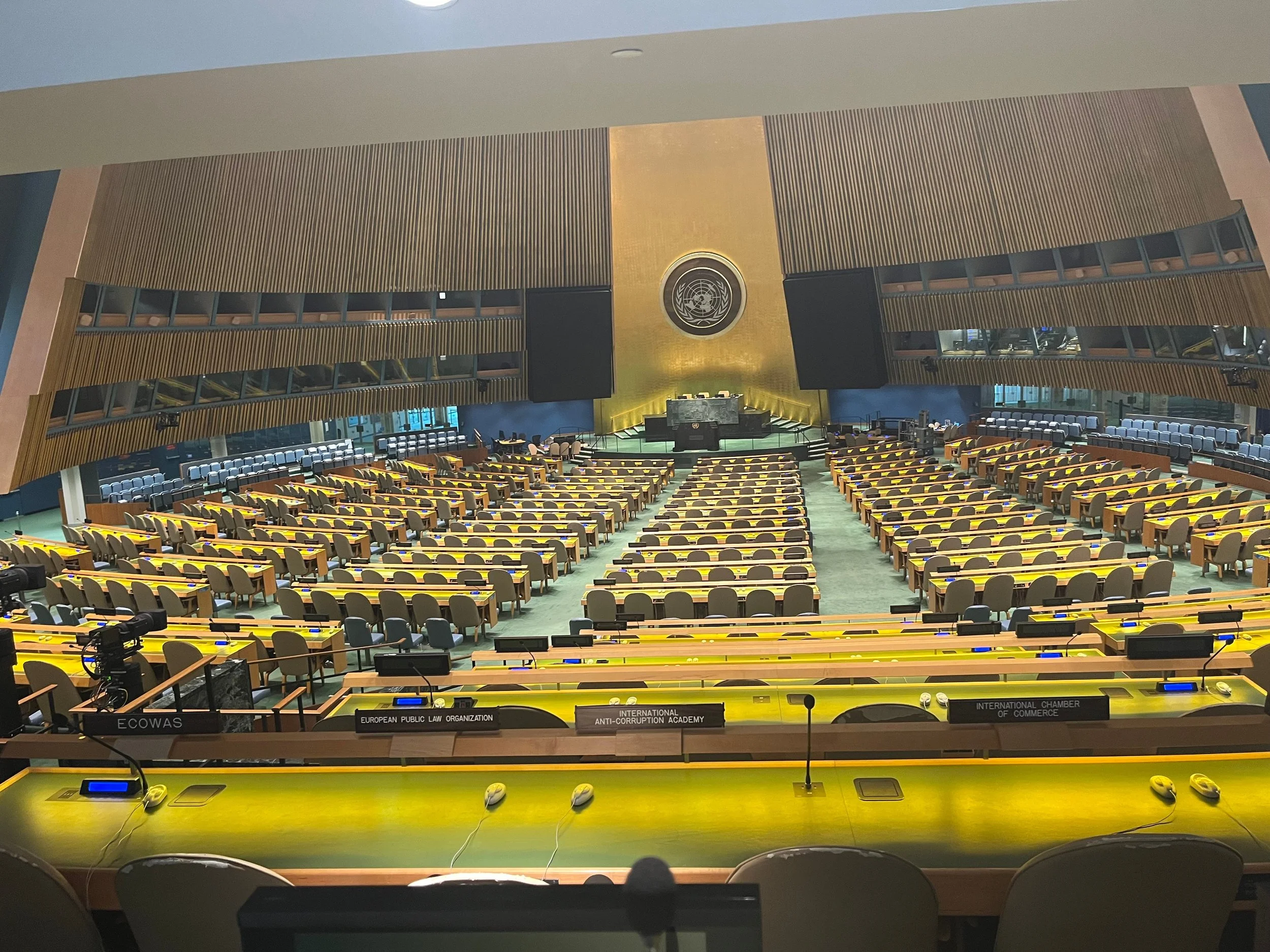
A Superpower Spending Down Its Goodwill
That host country — the U.S.A — the nation that did more than any other to build the postwar order, seems determined to turn that order upside down. In doing so, it is squandering every advantage it has.
Soft power went first. USAID, for six decades one of the most effective instruments of American influence abroad, has been dismantled. Even the World Cup, a once-in-a-generation chance to welcome the world, turned into a diplomatic own goal when Trump personally called FIFA’s president to get a U.S. striker’s red card reviewed, and the suspension was lifted.
Hard power, meanwhile, has been wielded recklessly: tariffs on friends and foes alike, the abduction of a foreign leader (Venezuela) and subsequent grab of their oil assets, threats to takeover Greenland and Canada. Then, while pouting about not being seriously considered for a Nobel Peace Prize, Trump made a shambolic General Assembly address that used the world’s hallowed diplomatic stage to talk about annihilating Iran, a country against which he earlier this year launched a war.
Canada Shows How It’s Done
Our neighbor to the north, that country Trump has trolled as the “51st state,” has offered a master class in the alternative. Rather than trade insults, Prime Minister Mark Carney has outmaneuvered Washington by building with everyone else.
Days before the UN General Assembly (UNGA) in New York in September, he worked with European Commission President Ursula von der Leyen, striking a deal to make Canada the EU’s first-ever “associate” member — a status so innovative that it doesn’t even exist yet. The next day, Carney addressed the European Parliament in France, outlining how cooperation on trade, AI, defense, and critical minerals could benefit all.
Carney also trolled Trump back: “We are not fair-weather allies,” he said. “We do not pursue zero-sum deals. Our commitment to the rule of law, and our unyielding defense of human dignity, individual freedom, and democracy share the same deep roots, the same unwavering dedication.”
Then, in New York, Canada joined Australia, Barbados, Brazil, the EU, India and Kenya in launching Partners for Multilateralism (P4M), a coalition of middle powers and developing nations committed to international law and to making the UN system deliver. Within days, 15 more countries had signed on, from Norway to Uruguay.
“Nations are strongest when they build together,” Carney posted on X. “At the 81st Session of the United Nations General Assembly in New York, Canada is choosing to step forward. To lead. To shape what comes next.”
Neither effort involved dropping bombs, issuing tariffs, or bullying from the pulpit. If Carney receives a Nobel Peace Prize this week, who knows what chaos that will trigger in the Oval Office?
Big Ideas from Small Islands
Canada’s was not the only Prime Minister raising eyebrows in New York at UNGA. UNGA coincides every September with Climate Week in New York, adding up to more than 1,000 events with high-level speakers from government, the private sector, academia, and the nonprofit world. Amid all that noise, two of the clearest voices came from Small Island Developing States (SIDS): Lord Fatafehi Fakafanua, Prime Minister of Tonga, and Mia Amor Mottley, Prime Minister of Barbados.
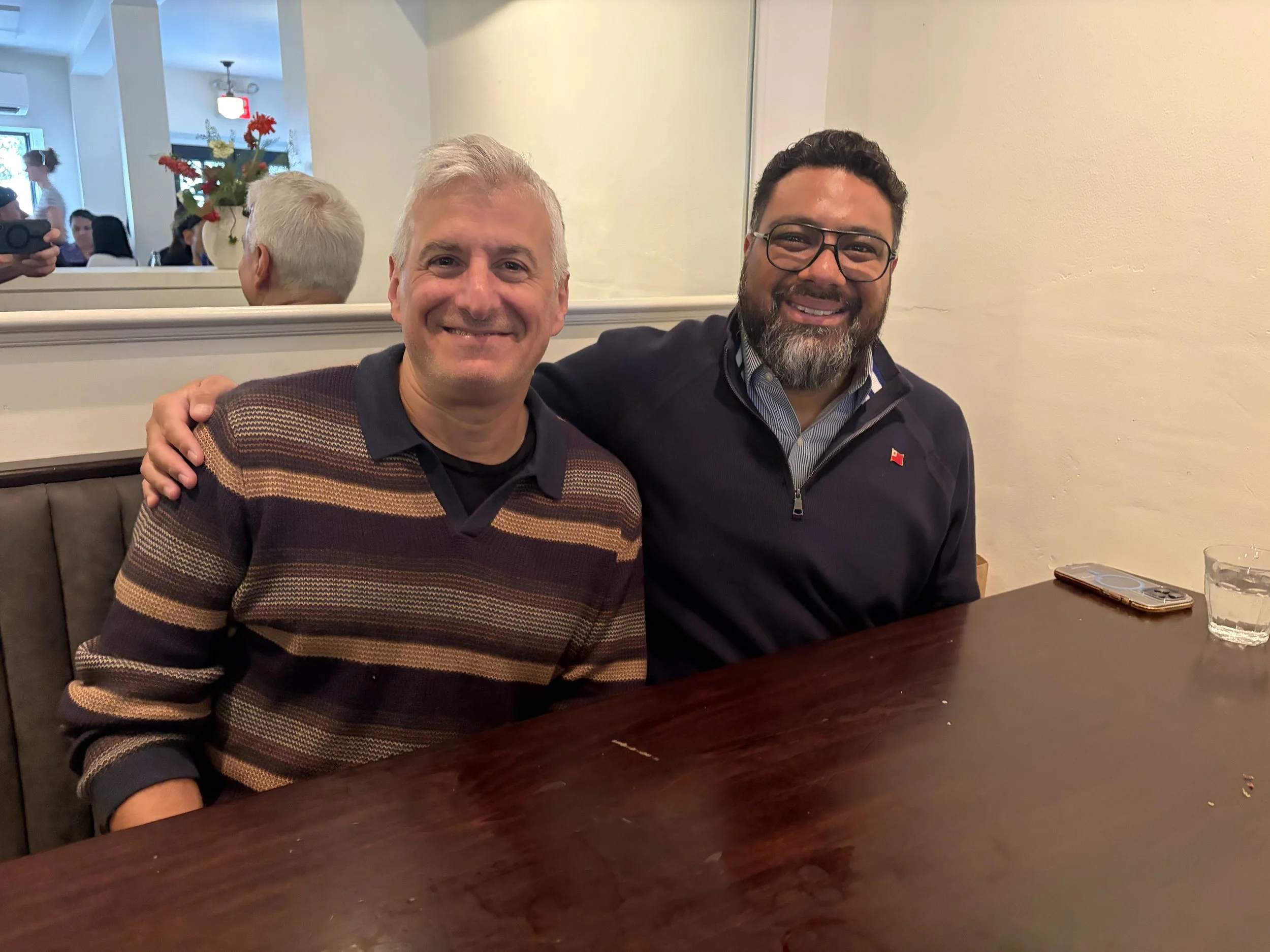
Tonga Prime Minister Lord Fakafanua and Brooklyn Story Lab CEO Lance Gould in New York during UNGA
Both struck a tone of clear-eyed resolve. In their speeches to the General Assembly, both emphasized two things: a continued commitment to multilateralism, and an overhaul of the diplomatic architecture of the 81-year-old UN, so that increasingly aggressive superpowers don’t drown out the voices of smaller nations.
“The Security Council still has 15 members, five of them permanent,” PM Mottley noted. “And armed with that veto. Africa, with 54 states, has no permanent seat.”
Mottley herself had been floated as a candidate to take the reins of the UN. But given her outspokenness, and the veto wielded by the so-called P5, the odds she could run that gauntlet were slim. Still, Barbados is now a founding member of P4M, proof that small states can help set the agenda rather than simply react to it.
“Our Constitution of 1875 secured Tongans’ rights and freedoms over seven decades before the Universal Declaration of Human Rights,” said Lord Fakafanua during his address. “It reflects our fierce determination to chart our own course. That is the essence of our sovereignty. Multilateralism allows us to project the power of our ideas rather than the might of our power.”
Stronger Together, Still
Since the pandemic, we have been in a near perpetual polycrisis, lurching from one shock to the next: wars, supply-chain breakdowns, inflation, record heat, and now the disquieting notion that our computers can, er, wipe out life on Earth. These problems feed on one another and respect no borders. No nation, however powerful, can solve them alone.
The UN’s founders understood that in 1945, after two world wars. Whoever takes the Secretary-General’s chair in January will inherit a strained, underfunded institution and a host country whose leadership has turned its back on it. But this year’s General Assembly showed that the UN’s ideals still have champions, in a middle power to our north and in two island nations that refuse to be drowned out.
The best way to avoid chaos is not to go it alone. It is to work together toward the goals we share. The next Secretary-General should, diplomatically or not, make that case.
** There is no legal prohibition in the UN Charter from seeking a third term, but the last one to try it, Kurt Waldheim, was thwarted by 16 consecutive vetoes from Security Council Permanent Member China, so don’t bet on anyone getting a third term anytime soon.