
California’s Radioactive Riviera
Twice this year, Southern California got a glimpse of just how quickly "nothing to fear" can become "holy crap."
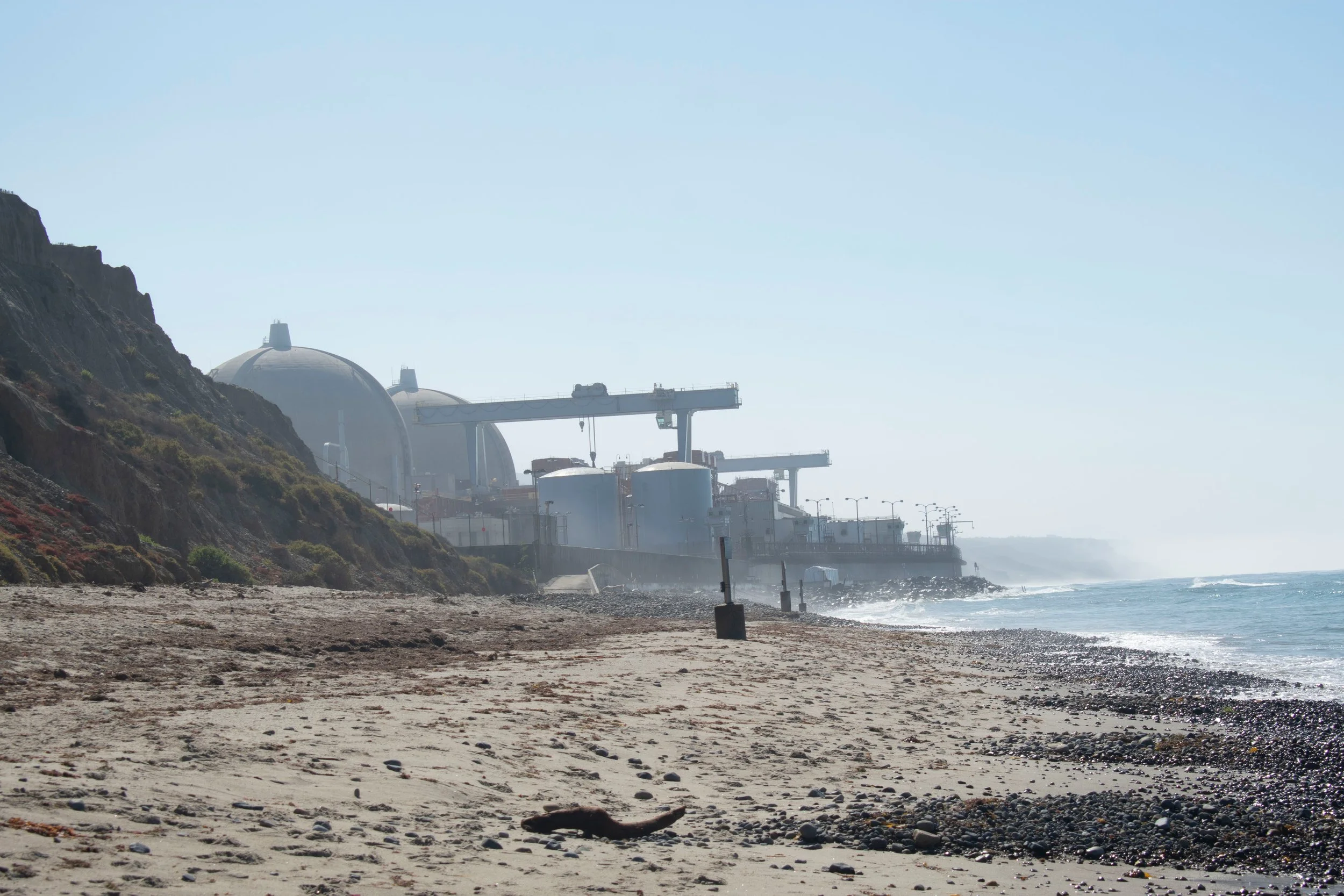
California’s decommissioned San Onofre Nuclear Generating Station, from which 3.6 million pounds of radioactive waste are buried on the beach.
In May, a tank holding 7,000 gallons of a flammable and volatile liquid (methyl methacrylate) at a Garden Grove aerospace plant near Anaheim flirted with disaster, forcing a mandatory evacuation of 50,000 people across Orange County. Officials warned that the chemical could either a) spill or b) trigger a vapor-releasing mega-explosion. You know — nothing to worry about.
California Governor Gavin Newsom declared a state of emergency for the county, and the issue was resolved when a crack in the tank wall relieved the building pressure.
Weeks later, shifting winds sent the Sandy Fire racing toward the old Santa Susana Field Laboratory — the site of one of the worst partial-nuclear meltdowns in U.S. history — close enough that residents packed go-bags and fled on their own, even though officials only called for a voluntary warning.
Neither disaster fully materialized into the worst-case scenario. But why are we playing Russian roulette with our environment and energy? Both incidents were close calls, enough to remind anyone paying attention that "probably fine" is not exactly a “plan.”
Now consider what's sitting on the beach at San Onofre, near San Diego: roughly 3.6 million pounds of spent nuclear fuel, stored in thin-walled steel canisters that are past or approaching their sell-by date. Those aging canisters sit a few feet above the water table, in a tsunami zone, near two earthquake faults, on a stretch of coast so seismic it’s nicknamed Earthquake Bay — starting to get the picture?
There is still no national long-term repository to which this toxic waste — again, millions of pounds of it — can be moved. Pardon the double negative, but it ain’t going nowhere.
This is the backdrop against which Newsom and New York Governor Kathy Hochul have both moved to double down on nuclear power. Newsom is pushing to extend the life of Diablo Canyon, California's last operating nuclear plant, and Hochul by declaring that she aims to build more nuclear generation “than has been built anywhere in the United States in the last 30 years.” Both frame nuclear power as a “clean” energy necessary for the demands of data centers and the modern economy. (President Donald Trump is even worse, looking to quadruple domestic nuclear capacity from roughly 100 gigawatts to 400 gigawatts by 2050.)
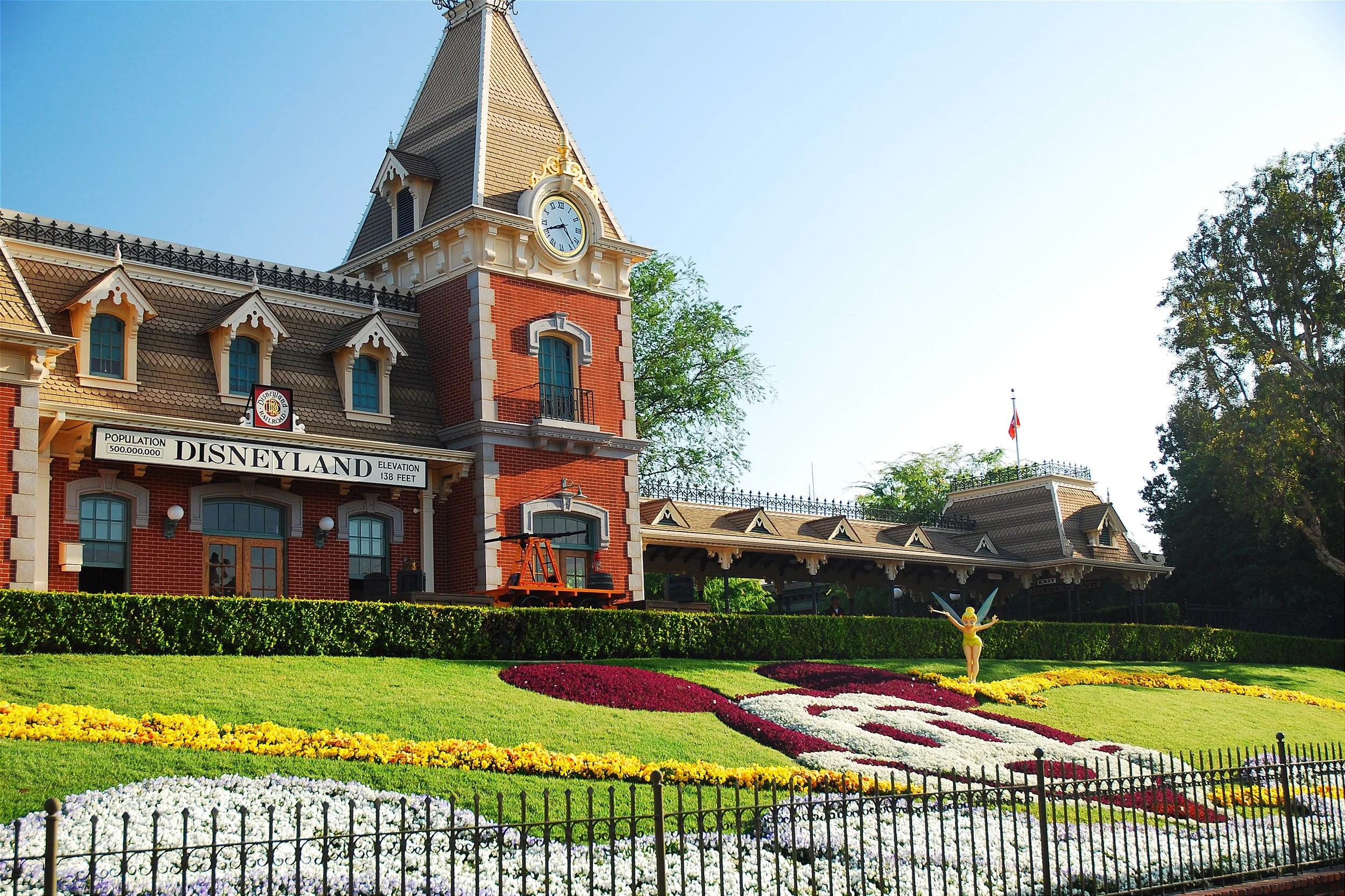
Disneyland in Anaheim, close to the site of a near-catastrophic chemical explosion.
But "clean" greatly distorts what nuclear power actually leaves behind. The waste doesn't go away when the plant shuts down — it just becomes someone else's multi-generational liability, stored on borrowed time, in infrastructure engineered for a fraction of the years it will actually have to last. The “Radioactive Riviera” of San Onofre is what that liability looks like 13 years after the reactors stopped running: millions of pounds of spent fuel still sitting in beachfront storage with no permanent home. (And in 2028, Olympic surfers will compete less than three miles up the coast at Trestles.)
None of this requires imagining a meltdown to make the case. It just requires looking at what already happened this year, in two locations, an hour's drive apart. A chemical tank that nearly forced a regional evacuation and a wildfire that came within a quarter mile of a contaminated former reactor site. California just got two strikes, and it's salivating for strike three.
Renewables don't carry that asterisk. Solar and wind don't produce a byproduct that needs policing for 10,000 years or more, or storage casks with an expiration date nobody can fully declare as safe. What San Onofre, Diablo Canyon, Garden Grove, and Santa Susana have in common is a reminder that dangerous elements come with risks too great to mess with. So, again: Nothing to fear. Until there is.