
The Amazon Is Burning

A fire at last month's COP30 UN climate conference — this year held in the Brazilian city of Belem, a gateway to the Amazon River — temporarily closed the Blue Zone where official negotiations took place, and led to about a dozen being treated for smoke inhalation. That fire is a bit of an easy metaphor for both the destruction of the Amazon rainforest and the destructive, planet-warming influence wielded by fossil-fuel stakeholders over the proceedings. All that was missing, allegorically, was a fiery dumpster nearby.
This year's COP — the annual UN “Conference of the Parties” climate gathering — was the first to be hosted by Brazil since the original Earth Summit, “COP Zero,” was held in Rio in 1992. I attended that ’92 summit and was greatly looking forward to returning to the land of the Canarinha more than 30 years later for this year’s conference in Belem — selected by Brazilian President Luiz Inácio Lula da Silva precisely because of the powerful symbolic message of hosting a climate conference in the Amazon. But the infrastructure in this impoverished city simply isn’t built to absorb 50,000-odd delegates, journalists, activists, observers, and other stakeholders. Lodging was scarce almost from the moment Belem was announced, and the eye-popping cost of attending priced me out. (Lodging became speculative — rates of over $1,000 a night, with many local residents evicted to make room for attendees — giving an opening to forward-thinking owners of by-the-hour “love hotels” converting to overnight lodging.)
But the very recognition of hosting a UN climate conference in the Amazon offered some hope that COP30 would be different than the ones that immediately preceded it. COPs 28 and 29, respectively, were held in the petro-states of Azerbaijan and the UAE, and were dubbed “the oil COPs” because of the record number of oil-industry lobbyists in attendance. More optimistically, this year’s conference was dubbed the “Forest COP,” and forests were indeed front and center for the proceedings.
And in the end, some progress was made on forests: the summit saw the formal launch of the Tropical Forests Forever Facility (TFFF), a proposed multibillion-dollar fund structured to pay countries for verified reductions in deforestation rather than for logging-driven growth. And countries in the Amazon, Congo Basin, and Southeast Asia reached a renewed (though still voluntary) agreement to coordinate on deforestation targets, a limitation that has historically weakened similar pledges because countries face no enforcement mechanism if they fall short. While these are encouraging steps, they are far from the systemic protections scientists say are necessary to keep forest loss from tipping the global climate system into irreversible decline.
And though this wasn’t an “Oil COP” in name, it may as well have been. Fossil-fuel influence was impossible to miss in the final negotiated text, which leaned on ambiguous language about pursuing an “orderly and just transition,” and thus failing to commit to a full phase-out of coal, oil, and gas, a loophole large enough for every major producer to stroll through. Delegates also inserted generous allowances for carbon capture and “abated fossil fuels” (meaning continued fossil use paired with uncertain carbon-capture offsets), a victory for petro-state lobbying.
Equally troubling was the absence of an official U.S. delegation — a diplomatic abdication — and the Trump administration’s rapid unwinding of U.S. climate policy. [Post-COP, this week, Team Trump favored gas-fueled vehicles despite methane’s high warming impact and pushed fleet-wide emissions standards back to 2032, having already begun undoing the Biden-era rules driving the EV transition.]
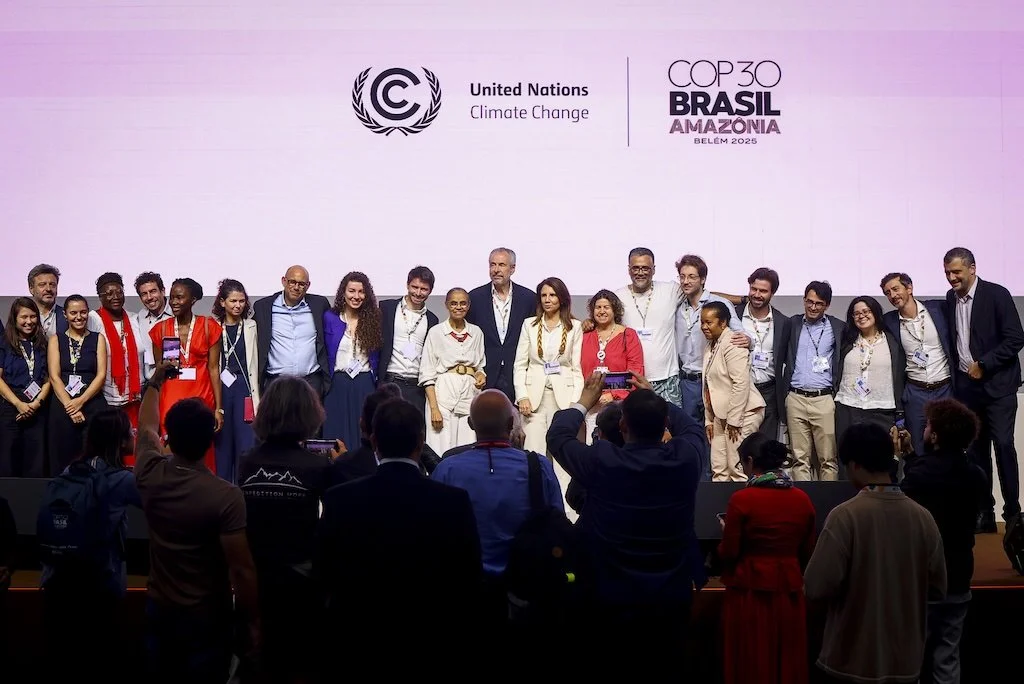
All that said, was COP30 a success or a failure? It’s a bit more nuanced than that. In the sweltering heat in a biome near collapse, there were the symbolic victories — holding the conference in the Amazon did send a signal that land, rainforests, and Indigenous peoples are part of the equation, and Indigenous leaders played a more visible role on panels and in press briefings than in previous years. And there was also a win for the process itself: multilateralism held, with 195 countries and entities managing to reach an agreement, even in the absence of the United States. But most importantly, COP30 failed to either secure a binding roadmap to phase out fossil fuels or even commit to a global deforestation end-date. The stronger action desired by most attendees simply went up in smoke.
Now attention turns to Turkey and Australia, which had both campaigned to host next year’s COP31. The two nations struck an unusual compromise: Turkey will serve as host while Australia will hold the conference presidency — a split arrangement rarely used at COPs, which typically consolidate both roles in the host nation — and has pledged to place Pacific Island priorities at the center of its agenda, representing many of the Small Island Developing States most threatened by rising seas. Both countries face credibility questions — Turkey over coal dependence and Australia over continued LNG expansion — which will shape expectations heading into COP31. We'll see whether next year’s event can course-correct from the egregiously fossil-fuel-friendly outcome of this year’s conference. — Lance Gould